Here at CeeFit, we want to speed up your results.
Too many people struggle with the ins and outs of training and trying to understand exactly how muscle reacts and works in your body. We make it simple. Below are the top five types of lifts that will slingshot your progress.
1. The Squat
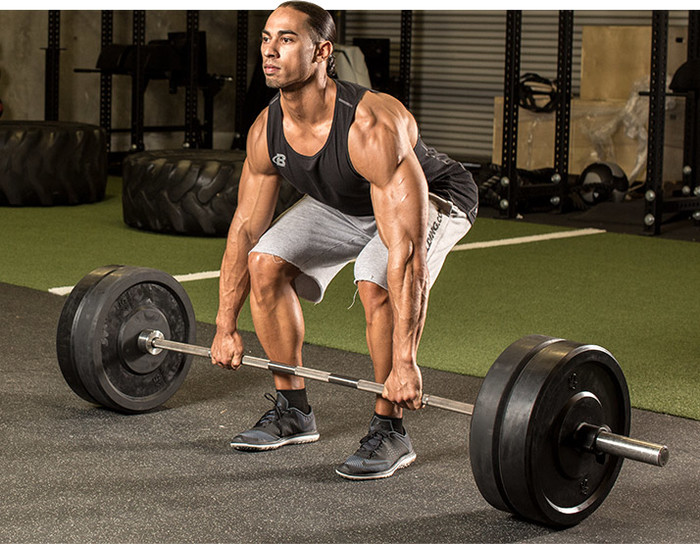
2. THE DEADLIFT
3. BENCH PRESS
4. PULL-UP
5. MILITARY PRESS
Why?
Squats will help strengthen your bones and your muscles (and your knees!), and can also increase flexibility. Increasing the strength in your knees and hips (and entire body) reduces your chance of injury while doing both athletic movements and everyday life things (such as shoveling the driveway or standing up and sitting down). And by learning to squat deeply, safely, you’re improving your range of motion and helping make you anti-fragile and protecting yourself against future injury.
Why?
The Deadlift works more muscles than any other exercise, including the squat. The lift engages all of the important muscle groups. The Deadlift works your lower and upper body, including your back muscles. Deadlift increases the grip strength if used without straps and also strengthen the forearm muscle.
Why?
For those of you who think the bench press is simply for the ego, you’re wrong. It’s true no other exercise is more frequently talked about. However it’s not so strange when you think about it. The bench press is a core fundamental exercise for developing upper body strength. You’re not only working your pectorals (chest), you are also working your anterior deltoids (front shoulders), triceps brachii, and latissimus dorsi (back). If you could pick just one exercise to acquire a full round chest with some functional power to go with it, you would be wise to go with the bench. You just can’t develop the same upper body with any other exercise.
Why?
The pull-up could is a foundational upper body exercise. It’s an exercise that carries a ton of benefits and it can be used for benefit in nearly every training setting. Outside of having specific strength, muscle, and sport benefits, the pull-up could also be described as a milestone movement, as in, it’s an amazing first accomplishment to tackle in strength training.
Why?
The barbell shoulder press/military press is a compound barbell movement that builds serious upper body mass, strength, and can boost performance for strength, power, and fitness athletes. In this article we will discuss who would benefit from performing this exercise, what they can expect, and how those athletes can start integrating the barbell shoulder press (also called the military press) in their current training program.
How Often?
If your goal is to improve your strength for the squat, then you’ll want to increase your training frequency for these lifts accordingly. An increase in frequency will improve your overall threshold for training these exercises, along with giving you more exposure to practice form and technique. Ideal frequency to improve one lift will vary based on multiple individual factors, but generally you’ll want to train that ONE movement 2-4 times a week. We recommend at least once, but ideally 2x per week to facilitate recovery.
How Often?
While deadlift frequencies vary across weight classes and experience levels, most lifters will benefit from deadlifting once or twice a week. In order to scale your deadlift training to once every two weeks, the time will come and your body will know when its ready for another programming tweak.
How Often?
Training frequency is a hot topic in strength and conditioning circles because like every other training variable, it’s best uses are highly dependent on multiple factors. If your goal is increasing bench press strength and upper body mass, then generally speaking, it appears that upping your bench press frequency to 2, 3, 4, and maybe even 5 times a week can be a powerful tool to help you achieve your goals.
How Often?
Chin-ups and pull-ups are two of the most effective exercises for building latissimus dorsi muscles and the overall upper body. As with any exercise or fitness program, it’s important to consult your program before engaging in these exercises. The frequency at which pull-ups and chin-ups should be performed depends upon the goals of a given program. We recommend 3-6 sets a week, split between two separate days.
How Often?
Like all programs the most important thing to remember when discussing frequency is recovery. For the military press we recommend to follow your program and include them in the same session as your bench press.
Let’s make something together.
 CeeFit Training