Why Tracking is so Important
Why do you struggle to achieve your desired physique? So many of us struggle for various different reasons, but in my experience it comes down to one very basic principle. The biggest struggle for anyone attempting any sort of body recomposition is nutrition. Getting into the gym, having fun with your workouts, and really dedicating time to actively work on your body is a main part as to why people get into body recomposition in the first place. Working out comes naturally whilst nutrition is a bit forced. And while getting into the gym and lifting weights is definitely the fun part to any training program, plain and simple food is what controls the way our body shifts and changes.
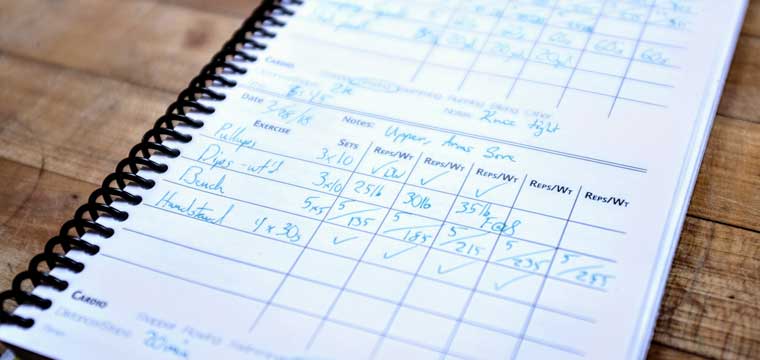
So how do we dial in our nutrition and enhance our progress? According to multiple different studies that will be referenced throughout this article, one key factor is tracking and recording your eating. Whether you are losing weight, adding muscle, or attempting to do a bit of both, you MUST know what and how much you’re eating. These different recomposition processes require many different elements in order to occur, but can be boiled down to a few simple principles. For weight loss, a caloric deficit is required. For weight gain, a caloric surplus and proper muscle stimulus is required. And for full body recomposition, some days must be set into a caloric deficit, and some into a surplus. Without understanding how much you’re eating, none of these could be properly achieved. According to Harvard Medical School, “keeping a journal can be a very effective tool to help change behavior. In one weight loss study of nearly 1,700 participants, those who kept daily food records lost twice as much weight as those who kept no records”. And while this was a small sample study, this gives us a huge insight into how to move forward with your nutrition. If you need help determining what or how much you should eat, check out the rest of our blog for full guides on how to setup your own program!
Plenty of people choose not to track, or are wary of the pressure it might bring to those who struggle with eating. And while these concerns are definitely a struggle, and I personally have struggled with these psychological factors, there are ways around these struggles that will continue to allow you to make progress. Our first recommendation is to not track every single day. Most goals can be achieved through our 80/20 rule. 80% of the time tracking and eating as healthy as possible, and 20% of the time enjoying your time and eating outside of your regular schedule. Our second recommendation is allow yourself one or two full cheat MEALS (not days) a week. These meals serve as a psychological reset and go a long way towards helping you keep a sustainable eating schedule.
Once your goal is established, and you have an understanding of how much you need to be eating on a daily basis, there are multiple different ways you can track. Modern technology has supremely advanced our understanding of calories, and most food items can be found in various databases that outline their caloric content, and their macronutrient and micronutrient content. For on the go tracking, we recommend MyFitnessPal or Cronometer as useful and extensive apps that will help with tracking.
How To: Basic Macronutrient Setup for Flexible Dieting
Whats up guys! Just wanted to get on quick and share my steps for setting up your basic macronutrient composition. Check out below to see the steps I used to setup my basic macro count!
1. https://tdeecalculator.net/ is the calculator I used to find my total daily energy expenditure of 3,000 calories
2. I like a lower fat diet so I took 25% of 3,000 which came out to 750 calories. Every gram of fat equals 9 calories, so 750/9 gave me 83 total grams of fat.
3. I recommend 1 gram of protein per pound of bodyweight. I weigh 210 pounds so 210 grams of protein. Every gram of fat equals 4 calories, so 210*4 = 840 calories.
4. Now take the amount of fat and protein calories, add them together 750 + 840 = 1,590 and subtract that total from your base calorie count. 3,000 – 1,590 = 1410. This is the amount of calories coming from carbohydrates and since carbohydrates equal 4 calories per gram, 1410/4 = 353, or 353 grams of carbs.
So there you have it! Use these simple tips to get your flexible dieting setup!
 CeeFit Training