FAQ

Hi! My name is CJ, Creator of CeeFit

At CeeFit we want to be as personable as possible, and if you have any questions that are not covered here, feel free to us the contact button above and I would love to help answer your questions.

1. What inspired you to start this kind of blog?

Growing up I was fortunate enough to play high school, club, and collegiate level water polo as well as swimming. My entire life I was basically given the proper tools to train and recover properly at a high level. When I finished with both of these, I found myself in a pretty severe downward spiral of weight gain and inactivity. Between coming out of that and finding a passion for helping others in the gym and with their nutrition, I chose to start this style of blog in order to help people better their lives!

2. What makes you qualified to talk about either exercise or nutrition?

I am currently a certified personal trainer, and am currently studying a few nutritional programs in order to become certified as well. Between that, and have studied nutrition and training recreationally for years I am a good resource for information.

3. What is the best way to lose fat?

Too many people look to various kinds of diets to lose fat, and while a lot of them are viable over at least the short-term, most of them are not viable over the long-term. Simply put, the best way to lose fat is put yourself in a caloric deficit.

4. What supplements should I take?

I get this question a lot, and there are too many variable to go into without exploring too many topics. Simply adjust your diet first to make sure you are getting in the micronutrients you need daily, and then based on that, we can understand what you personally must supplement to fill any gaps. 

5. How do you overcome plateaus? 

My favorite ways to overcome plateaus in my training come down to two different methods. If you are in a caloric deficit, then a re-feed period where you are eating either at your caloric threshold or slightly higher is a great way to spur strength. The second is a de-load week. Meaning that you take a week but reduce the weight and remain active, increase the amount of water you’re drinking, and attempt to get more sleep. 
How To: Basic Macronutrient Setup for Flexible Dieting

Whats up guys! Just wanted to get on quick and share my steps for setting up your basic macronutrient composition. Check out below to see the steps I used to setup my basic macro count!

1. https://tdeecalculator.net/ is the calculator I used to find my total daily energy expenditure of 3,000 calories

2. I like a lower fat diet so I took 25% of 3,000 which came out to 750 calories. Every gram of fat equals 9 calories, so 750/9 gave me 83 total grams of fat.

3. I recommend 1 gram of protein per pound of bodyweight. I weigh 210 pounds so 210 grams of protein. Every gram of fat equals 4 calories, so 210*4 = 840 calories.

4. Now take the amount of fat and protein calories, add them together 750 + 840 = 1,590 and subtract that total from your base calorie count. 3,000 – 1,590 = 1410. This is the amount of calories coming from carbohydrates and since carbohydrates equal 4 calories per gram, 1410/4 = 353, or 353 grams of carbs.

So there you have it! Use these simple tips to get your flexible dieting setup!

Why A Progressive Overload Is Necessary for Hypertrophy

What is the best way to maximize hypertrophy (muscle growth) and strength? In the fitness industry there are a lot of answers to this question, but we have your answer. Progressive Overload. Now let us tell you why.

When designing a training program for increasing muscle size, the principle of specificity helps us determine which exercises we can choose from when trying to develop each muscle group to its maximum potential. For most programs, they can be split into varying days that target different muscle groups. Push days can utilize a host of exercises that our pull days will not. The principle of individuality helps us decide which of those exercises to select, how to allocate volume, and how many workouts to do for each muscle each week. And the principle of variety makes sure that we continue progressing, and do not get stuck on a plateau.

There are so many varying principles revolving around training and how best to amplify muscle growth and strength. Here at CeeFit we believe that all of these concepts can be broken down into one important concept. Progressive Overload. The principle of progressive overload is less important for hypertrophy at the planning stage, but is more important in each workout, making it absolutely essential for achieving meaningful muscle growth long-term. This is because the presence (or absence) of progressive overload affects the mechanical loading stimulus that leads to hypertrophy.

So what exactly does all of that mean? Simply put, progressive overload means that over the long-term we want to put the muscle under exponentially increasing levels of stress. This will lead to a host of various benefits, but can be broken down by the following:

  1. Increases in muscle fiber size.
  2. Increases in the ability of each muscle fiber to produce force relative to its size, probably because of enhanced capacity to transmit force laterally between the muscle fiber and its surrounding collagen layer.
  3. Increases in the number of muscle fibers that are activated, because of an enhanced capacity to reach full motor unit recruitment (this contributes to an increase in the ability of the whole muscle to produce force relative to its size), and
  4. Increases in tendon stiffness.

Increases in muscle fiber size are triggered by a workout when individual muscle fibers belonging to the high-threshold motor units experience high levels of mechanical tension. So how do we put this in practice?

Easy. We must structure our workouts with progressive overload, either by increasing the weight slightly, or by increasing the number of reps, then the number of stimulating reps remains the same in each workout, and we continue to experience muscle growth (up to a point). Depending on your experience and your current strength levels determines our starting point and how often we want rotate our schedules. Check out the rest of our Training articles, or contact us if you need help getting started progressively overloading!

Top 5 Lifts for Strength and Hypertrophy

Here at CeeFit, we want to speed up your results.

Too many people struggle with the ins and outs of training and trying to understand exactly how muscle reacts and works in your body. We make it simple. Below are the top five types of lifts that will slingshot your progress.

1. The Squat

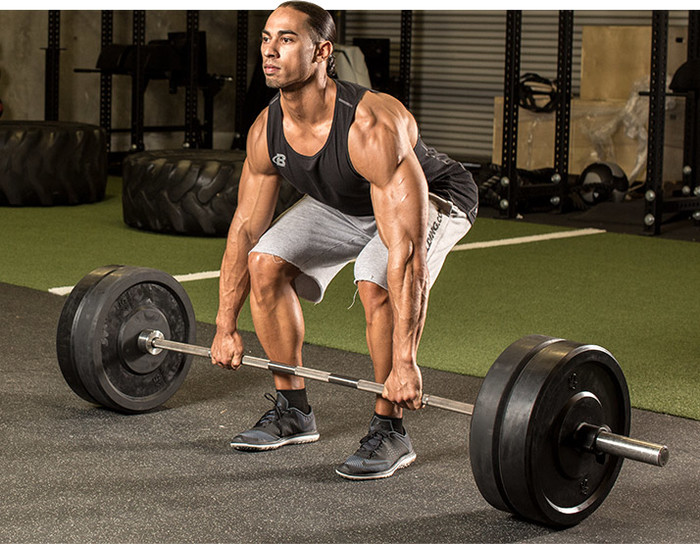
2. THE DEADLIFT

3. BENCH PRESS

4. PULL-UPS

5. MILITARY PRESS

Why Squat?

Squats will help strengthen your bones and your muscles (and your knees!), and can also increase flexibility. Increasing the strength in your knees and hips (and entire body) reduces your chance of injury while doing both athletic movements and everyday life things (such as shoveling the driveway or standing up and sitting down). And by learning to squat deeply, safely, you’re improving your range of motion and helping make you anti-fragile and protecting yourself against future injury.

Why Deadlift?

The Deadlift works more muscles than any other exercise, including the squat. The lift engages all of the important muscle groups. The Deadlift works your lower and upper body, including your back muscles. Deadlift increases the grip strength if used without straps and also strengthen the forearm muscle.

Why Bench Press?

For those of you who think the bench press is simply for the ego, you’re wrong. It’s true no other exercise is more frequently talked about. However it’s not so strange when you think about it. The bench press is a core fundamental exercise for developing upper body strength. You’re not only working your pectorals (chest), you are also working your anterior deltoids (front shoulders), triceps brachii, and latissimus dorsi (back). If you could pick just one exercise to acquire a full round chest with some functional power to go with it, you would be wise to go with the bench. You just can’t develop the same upper body with any other exercise.

Why Pull-Ups?

The pull-up could is a foundational upper body exercise. It’s an exercise that carries a ton of benefits and it can be used for benefit in nearly every training setting. Outside of having specific strength, muscle, and sport benefits, the pull-up could also be described as a milestone movement, as in, it’s an amazing first accomplishment to tackle in strength training.

Why Military Press?

The barbell shoulder press/military press is a compound barbell movement that builds serious upper body mass, strength, and can boost performance for strength, power, and fitness athletes. In this article we will discuss who would benefit from performing this exercise, what they can expect, and how those athletes can start integrating the barbell shoulder press (also called the military press) in their current training program.

How Often?

If your goal is to improve your strength for the squat, then you’ll want to increase your training frequency for these lifts accordingly. An increase in frequency will improve your overall threshold for training these exercises, along with giving you more exposure to practice form and technique. Ideal frequency to improve one lift will vary based on multiple individual factors, but generally you’ll want to train that ONE movement 2-4 times a week. We recommend at least once, but ideally 2x per week to facilitate recovery.

How Often?

While deadlift frequencies vary across weight classes and experience levels, most lifters will benefit from deadlifting once or twice a week. In order to scale your deadlift training to once every two weeks, the time will come and your body will know when its ready for another programming tweak.

How Often?

Training frequency is a hot topic in strength and conditioning circles because like every other training variable, it’s best uses are highly dependent on multiple factors. If your goal is increasing bench press strength and upper body mass, then generally speaking, it appears that upping your bench press frequency to 2, 3, 4, and maybe even 5 times a week can be a powerful tool to help you achieve your goals.

How Often?

Chin-ups and pull-ups are two of the most effective exercises for building latissimus dorsi muscles and the overall upper body. As with any exercise or fitness program, it’s important to consult your program before engaging in these exercises. The frequency at which pull-ups and chin-ups should be performed depends upon the goals of a given program. We recommend 3-6 sets a week, split between two separate days.

How Often?

Like all programs the most important thing to remember when discussing frequency is recovery. For the military press we recommend to follow your program and include them in the same session as your bench press.

Let’s make something together.

Do You Have to Train to Failure to see Growth?

I think this is one of the most asked and misunderstood questions in the entire fitness industry outside of the realm of nutrition. You know you’ve seen it if you’ve ever been into a populated gym. Guys and girls training hard, grunting, even yelling in some cases in order to force their muscles into failure. So many of these people believe that this kind of training is the way to maximize muscle growth potential. And while I for one love training to failure and do believe that in the right circumstance it is needed, it does have its time and place. So that begs the question, does training to absolute failure lead to muscle growth? Unfortunately the answer is not that straight-forward.

There are three different mechanisms for muscle growth. The first of which is muscle tension. Which basically means in order to produce muscle growth, you have to apply a load of stress greater than what your body or muscles had previously adapted too. How do you do this? The main way is to lift progressively heavier weights. I covered this aspect a bit more in depth in my article titled, “Why a Progressive Overload is Necessary for Hypertrophy“, so feel free to go check that out! The second is muscle damage. Which sounds weird to say, but in order for muscle to grow, you must cause muscle damage to release inflammatory molecules and immune system cells that activate satellite cells to jump into action. The last mechanism is metabolic stress. Metabolic stress causes cell swelling around the muscle, which helps to contribute to muscle growth without necessarily increasing the size of the muscle cells. In other words you force blood into your muscle in order to actively increase the muscle cell size.

So now that our mechanisms for growth are out of the way, failure or no failure?

Jeff Nippard, who is a renown training and nutrition expert argues that training to failure can definitely help with muscle growth, but should be used sparingly. Most muscle growth occurs during rest, sleep, and very very little occurs during the actual workout itself. When training to failure your body needs a significantly longer time to recover. So if you are constantly training to failure without the proper recovery, the growth will not show.

In order to maximize muscle growth you have to implement those three mechanisms of growth, all while maximizing recovery through food and rest. We recommend sticking to a progressive overload kind of style, where roughly every 4-6 weeks you will be hitting your peek weight and training to failure. During those periods where you are not hitting absolute failure, utilize enough weight to cause metabolic stress and muscle damage, and consistently train to where mentally you feel like you have one maybe two more repetitions until failure. This is the point where you can maximize growth whilst maintaining your recovery.

In conclusion, training to failure has its place, but should be used in a way that still allows your body to recover. This means training to a rate of perceived exertion where you leave one to two repetitions in the tank, and lowering the weight from the absolute max that you know you can lift. Focus on causing metabolic stress, muscle damage, and keeping muscle tension during the entirety of the lift.

COVID-19 And How We Can All Maintain Our Progress

I think it goes without saying that the outbreak of COVID-19 or the Corona Virus has impacted all of us. I have had so many people emailing, messaging me, or commenting on our posts asking our advice on how to maintain their progress without gyms, and in some crazy cases without access to proper nutrition. And while I could create a list or a few suggestions, I believe that is too simple for such an elaborate issue. Instead, I want to highlight my own personal progress maintenance, and help relate to your own personal life.

On March 28th, 2020 I lost my full-time position as most of you have due to COVID-19. Funny enough I work for a pretty large chain gym, and they closed down all of their locations. I was out of work and at the same time lost my biggest hobby and outlet for positive energy. I left work that day disappointed, but saw so many people around me experiencing the same thing. Which inspired me to make the best out of our current situation and continue to make progress. But how do we go about doing that? Simply we take the principles discussed throughout CeeFit and adapt them to whatever resources we have available.

The first adaptation, and would I would consider to be the most important, was my nutrition. Without the gym, my capacity to work (or in other words weight lift) was severely decreased. The best way to counter act that was to bring down my overall calorie count. For those of you struggling with the same thing, I recommend cutting your carbohydrates anywhere from 25-50% depending on your program and attempting to maintain your intake of protein. This will dictate the amount of glycogen store and utilization in this time of less overall work.

Primary take away:

Reduce overall calories according to your own personal work capacity.

Consider taking anywhere from 25-50% of carbohydrates while maintaining protein.

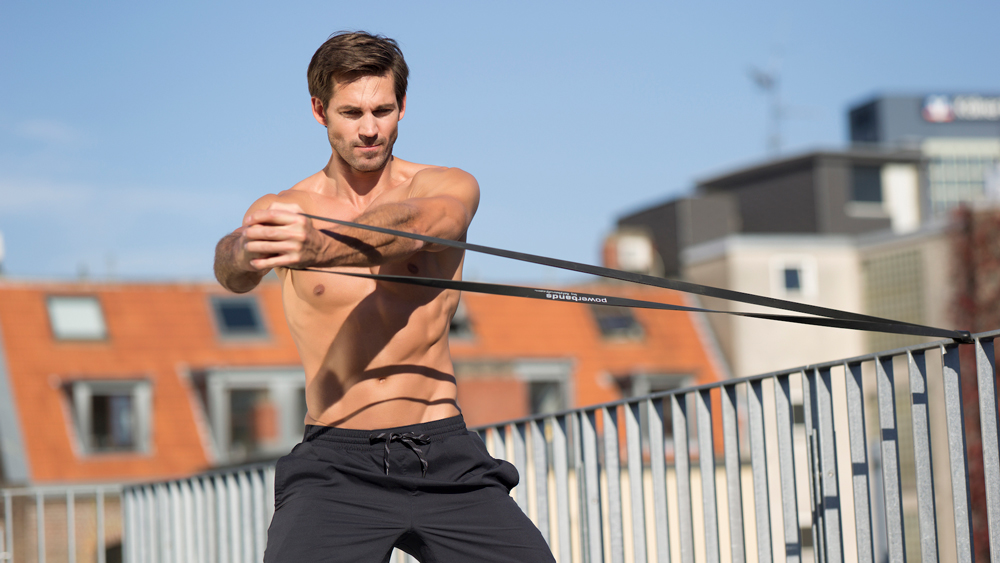
The second part would be adjusting our training accordingly. For me, this new way of living and working out gave me an opportunity to focus on areas that I lacked when the gym was available. For each of my lifts I doubled reps and sets in order to facilitate the same amount of stress on the muscle, and incorporated bodyweight and weighted bands to substitute for weight lifting. If you do not have weights at home, my main recommendation would be finding various household objects to use as resistance. And have some fun with it! I’ve used everything from laundry detergent to flour so get creative with it!

Primary Take Away:

Increase reps and sets as you see fit in order to facilitate roughly the same level of stimulus on the muscle.

Utilize household objects to increase the resistance.

In conclusion, we are all going through a ridiculously hard time. I want CeeFit to be a sanctuary where everyone can come together and push through this pandemic. I plan on showing you guys more and more of how we can all come together to continue our progress. Feel free to reach out to me, and let’s get going!

How Did You Find a Passion in Fitness and How do You Maintain it?

I believe one of the best things a person can accomplish in their lives is finding something they are passionate about. I feel so lucky to have found something that I am passionate about in life and continue to love every single day. But so many people haven’t found that yet, or have found something they are passionate about but find it hard to keep that fire burning. I believe it comes down to a few simple things, but here is my story, and the story behind the creation of CeeFit.

My fitness journey was founded on the principles that I learned playing water polo and swimming. Ultimately aquatics is what drove my discovery and passion for training, nutrition, and body recomposition.

Growing up I was fortunate enough to play high school, club, and collegiate level water polo as well as swimming. My entire life I was basically given the proper tools to train and recover properly at a high level. When I finished with both of these, I found myself in a pretty severe downward spiral of weight gain and inactivity. As so many people do, I began to feel depressed, I lacked energy, and I simply did not feel good. It was at this moment in life that I began to look after myself again, incorporating some of those tools I learned throughout my athletic career. But I soon hit a wall and realized that I could not train the same way as I had in the past. I began researching and going out of my way to learn as much as I could about training and nutrition and that is when I fell in love with this process. The fitness industry is vast and there is so much more that we have yet to learn, but that is so exciting. I wanted to share my knowledge with those who found themselves in the same position I was when I began this journey. Between coming out of that and finding a passion for helping others in the gym and with their nutrition, I chose to start this style of blog in order to help people better their lives!

I fell in love with the process. I loved seeing the small continuous signs of progress and wanted to share that with anyone and everyone!

So I guess that brings me to the second part of the question. How do I maintain that passion? The simple answer, is that I don’t. There is no secret, trick, or anything like that to maintain your passion, or maintain activity related to fitness. If you quickly lose interest or have a hard time maintaining it then it is not a true passion of yours. That may be hard to hear and you may disagree, but if done properly I believe the results will inherently keep you interested. If you are not seeing results there are ways around that plateau to keep you motivated and inspired. That can range from actually adjusting your training to even simple things like buying new workout clothes! Feel free to reach out to us if you are stuck in a rut and need help getting out of it. That is ultimately our purpose as we try to create a positive and healthy fitness community.

Why is Tracking so Important?

Why do you struggle to achieve your desired physique? So many of us struggle for various different reasons, but in my experience it comes down to one very basic principle. The biggest struggle for anyone attempting any sort of body recomposition is nutrition. Getting into the gym, having fun with your workouts, and really dedicating time to actively work on your body is a main part as to why people get into body recomposition in the first place. Working out comes naturally whilst nutrition is a bit forced. And while getting into the gym and lifting weights is definitely the fun part to any training program, plain and simple food is what controls the way our body shifts and changes.

So how do we dial in our nutrition and enhance our progress? According to multiple different studies that will be referenced throughout this article, one key factor is tracking and recording your eating. Whether you are losing weight, adding muscle, or attempting to do a bit of both, you MUST know what and how much you’re eating. These different recomposition processes require many different elements in order to occur, but can be boiled down to a few simple principles. For weight loss, a caloric deficit is required. For weight gain, a caloric surplus and proper muscle stimulus is required. And for full body recomposition, some days must be set into a caloric deficit, and some into a surplus. Without understanding how much you’re eating, none of these could be properly achieved. According to Harvard Medical School, “keeping a journal can be a very effective tool to help change behavior. In one weight loss study of nearly 1,700 participants, those who kept daily food records lost twice as much weight as those who kept no records”. And while this was a small sample study, this gives us a huge insight into how to move forward with your nutrition. If you need help determining what or how much you should eat, check out the rest of our blog for full guides on how to setup your own program!

Plenty of people choose not to track, or are wary of the pressure it might bring to those who struggle with eating. And while these concerns are definitely a struggle, and I personally have struggled with these psychological factors, there are ways around these struggles that will continue to allow you to make progress. Our first recommendation is to not track every single day. Most goals can be achieved through our 80/20 rule. 80% of the time tracking and eating as healthy as possible, and 20% of the time enjoying your time and eating outside of your regular schedule. Our second recommendation is allow yourself one or two full cheat MEALS (not days) a week. These meals serve as a psychological reset and go a long way towards helping you keep a sustainable eating schedule.

Once your goal is established, and you have an understanding of how much you need to be eating on a daily basis, there are multiple different ways you can track. Modern technology has supremely advanced our understanding of calories, and most food items can be found in various databases that outline their caloric content, and their macronutrient and micronutrient content. For on the go tracking, we recommend MyFitnessPal or Cronometer as useful and extensive apps that will help with tracking.

Let’s make something together.

Top 5 Mistakes Beginners Make in the Gym

The time you spend working on yourself both physically and mentally in the gym is precious. We want you to get after your goals and start feeling that feeling of accomplishment and progress that comes along with seeing your arms grow or that weight on the scale drop.

So are you ready to get after those new gym goals? Well so are we! So avoiding these top five mistakes are going to help you get there quicker, more efficiently, and trust us when we say, much more enjoyably.

  1. Overtraining

One of the biggest, if not the biggest reason people give up on their goals and drop out of the gym is simply doing too much, too soon. There are so many programs and so many different ways to attack your goals in the gym, but overdoing it can lead to injury and definitely burnout. Be sure to give your body the necessary food, recovery, and most importantly sleep in order to maximize your performance.

2. Undertraining

If overtraining is the biggest reason people drop out, then simply under training is the second. Even though you may have not exercised in years, or have a hectic schedule, simply not getting enough volume within your workouts can be detrimental as well. In order for muscle to grow, a stimulus must be put in to place to force them to grow. To lose fat, you must give your metabolism a reason to burn calories rather than store them. When picking your programming, strive for that perfect balance of volume and rest. And remember, this is a fine science that will take trial and error, so take a look at our various programs and see what works for you personally!

3. Not Switching it up enough

Make sure you’re having fun in your workouts! Modify exercises, change the sets and reps, and make sure your muscles are getting the variety they need in order to strengthen and grow. Take your training outside, join in with local sports, do what you can to make sure that you keep things fresh.

4. Expecting results too quickly

Fitness and health is just as much a mind-game as it is physical. When you start working out and eating properly you start to feel better and your mood improves drastically. Your body on the other hand take weeks and months to make the changes you want. Don’t sweat. Take your time, and allow the process to do what it is designed to do.

5. Comparing yourself to others

For me, this is one of the hardest pitfalls for any new gym-goer to avoid. We all know that feeling when you are working hard and following your program, and suddenly the person next to you is your in your ideal situation, making it look effortless. Don’t sweat. The beauty of the this kind of lifestyle is simply progress. Take pictures of your progress and reward yourself with various milestones to make sure you keep a positive and healthy attitude.

So there you have it! Avoid these tips and you will survive the first weeks, months, and eventually years into your journey. Comment, reply, or contact us directly and let us know how these helped you.


Follow My Blog

Get new content delivered directly to your inbox.

Design a site like this with WordPress.com
Get started